

Linear motion components are essential for achieving controlled and precise movement in countless industrial applications. Among the core technologies enabling this are linear guide rails and linear bearings. While both serve the fundamental purpose of facilitating linear motion, they differ significantly in their construction, operational characteristics, and ideal use cases.
I. Linear Guide Rails: Engineered for Precision and Rigidity
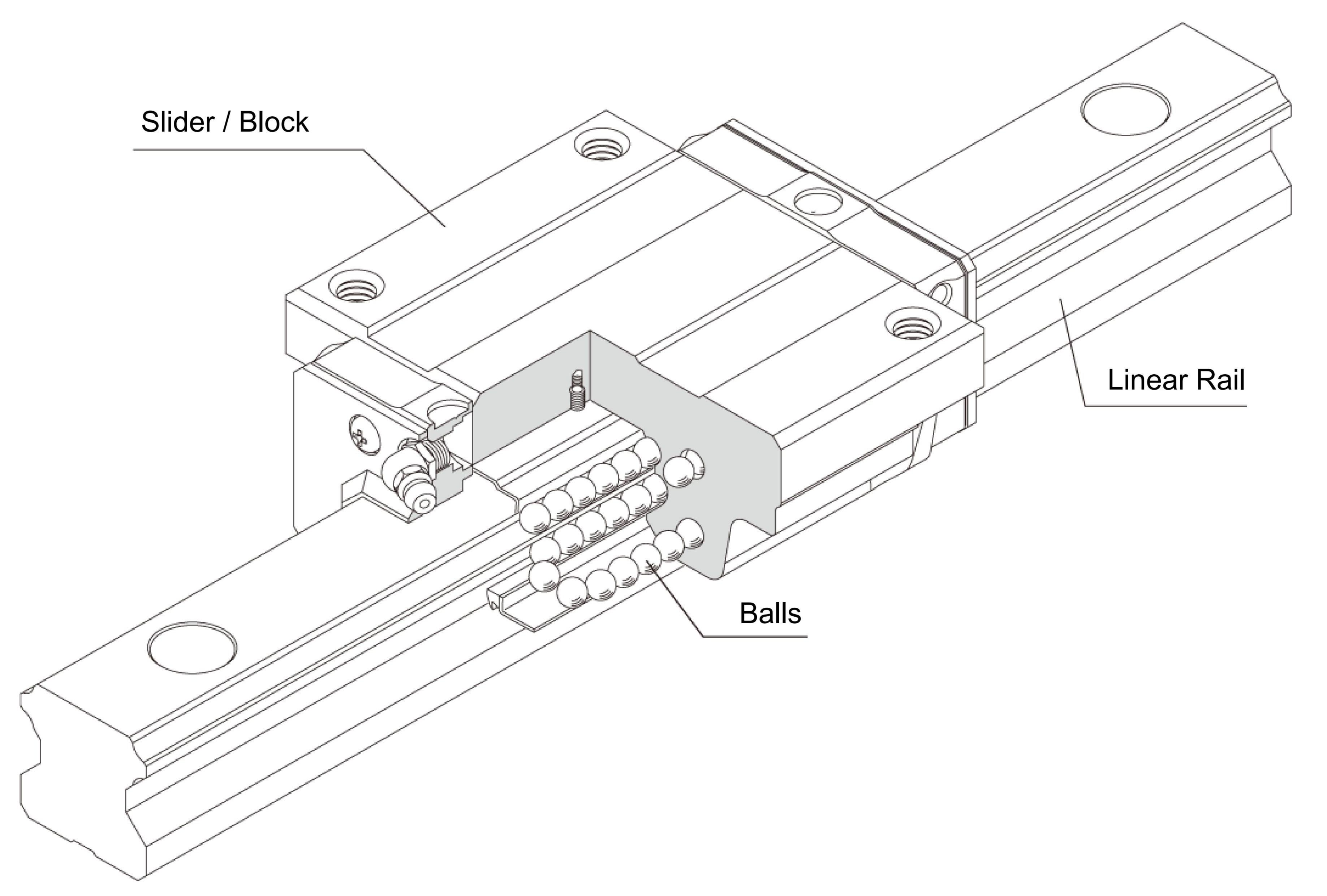
Linear guide rails, also known as linear motion guides or slide rails, represent a sophisticated solution for high-performance linear movement. Their design typically integrates a rigid rail and a sliding block (carriage) that houses recirculating rolling elements like balls or rollers. This configuration minimizes friction and allows for exceptionally smooth, accurate, and stable travel. Systems built with precision linear guide ways, such as those offered by KGG, are renowned for their high load capacity, outstanding rigidity, and superior positioning accuracy. Consequently, they are the preferred choice for demanding applications including CNC machining centers, semiconductor manufacturing equipment, industrial robotics, and other high-precision automation systems where minimal deflection and exact motion control are critical.
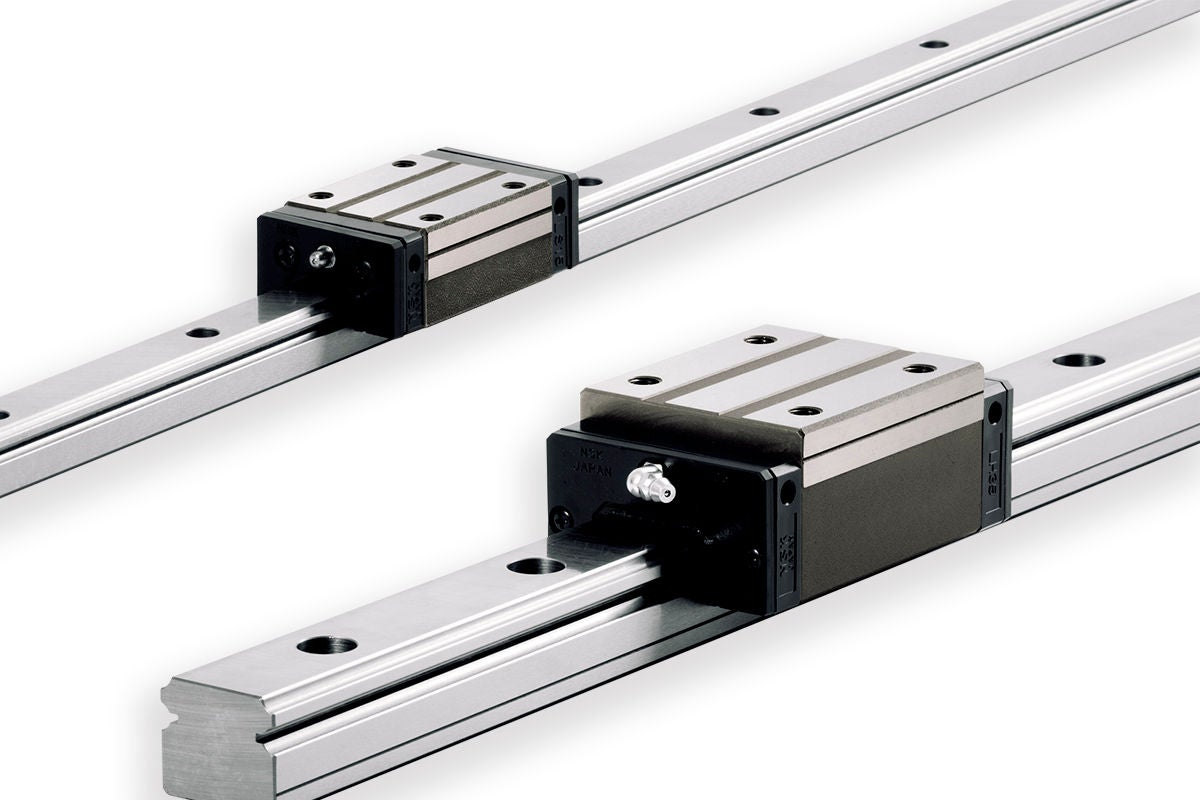
II. Linear Bearings: Compact Solutions for Simpler Motion
Linear bearings provide a more fundamental and often more compact method for achieving linear motion. A common design involves a cylindrical outer housing containing a low-friction inner sleeve or recirculating ball bearings, which slides along a hardened steel shaft (round rail). This structure is generally simpler and more space-efficient than that of a linear guide rail system. Linear bearings excel in applications requiring smooth, cost-effective linear motion where ultra-high precision and extreme rigidity are not the primary concerns. They are widely used in conveyor systems, packaging machinery, material handling devices, and various general automation tasks that benefit from their ease of installation and maintenance.
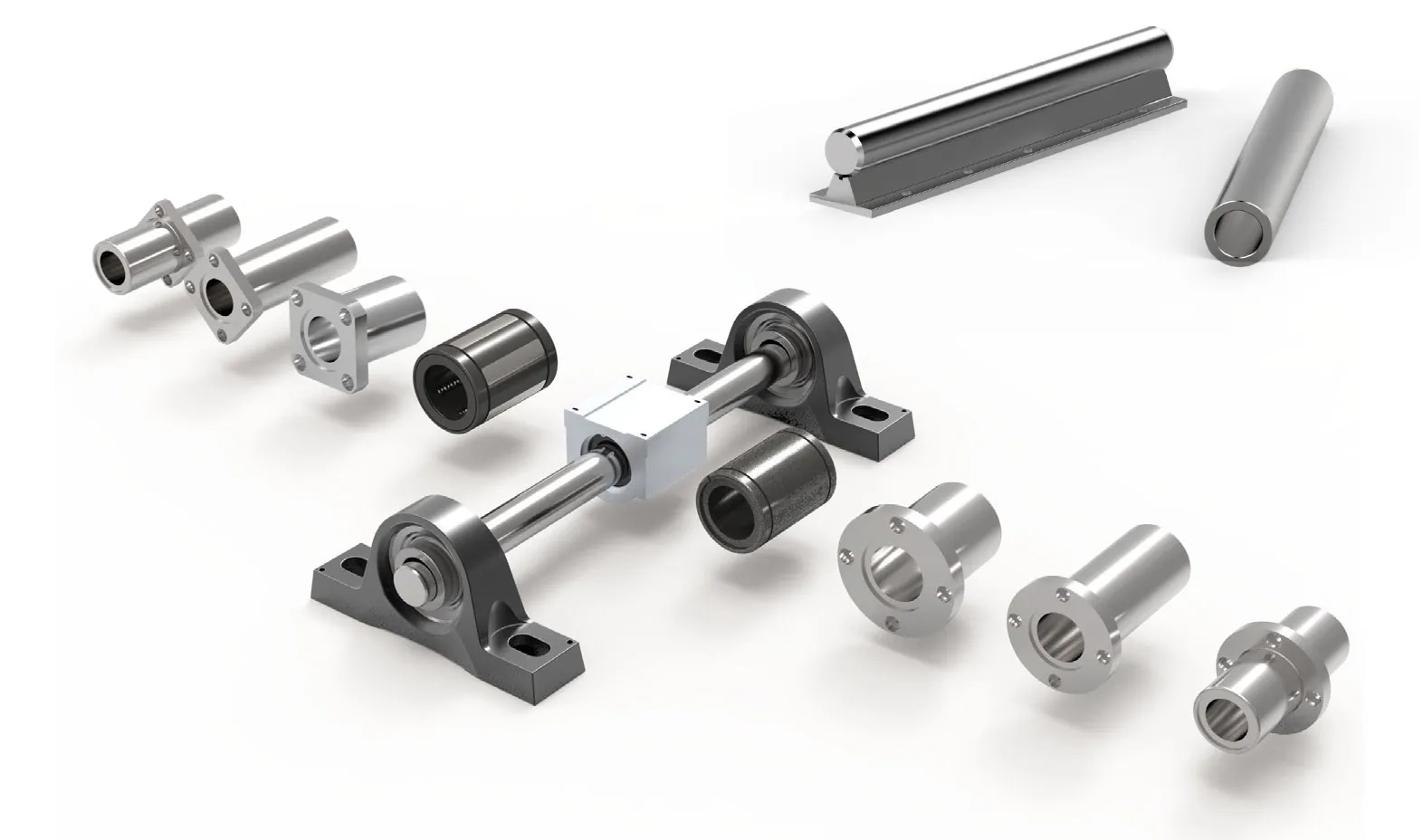
III. Key Distinctions Between the Two Technologies
1. Load Handling and Structural Stability
The primary structural difference lies in the contact area. Linear guide rails employ a large surface contact (via the rail and block), which distributes loads over a broader area, resulting in very high load capacities (both radial and moment loads) and exceptional stiffness. Linear bearings, often based on point or line contact with a round shaft, inherently offer lower load capacity and rigidity, making them less suitable for applications with heavy loads or strong torsional forces.
2. Operational Precision and Accuracy
Thanks to their rigid construction and precise manufacturing, linear guide rails are capable of providing very high levels of running parallelism, straightness, and positional repeatability. They are designed for applications where micron-level accuracy is essential. Linear bearings, while ensuring smooth movement, generally cannot match this level of precision and are better aligned with applications having more forgiving accuracy tolerances.
3. Speed and Frictional Efficiency
Linear bearings, with their typically simpler internal design and lower moving mass, often exhibit slightly lower rolling resistance. This can make them advantageous for certain very-high-speed applications. Linear guide rails, while also highly efficient, are engineered to optimize a balance of speed, precision, and load capacity, sometimes prioritizing stability over ultimate speed.
4. Environmental Suitability and Maintenance
Linear bearings, especially closed or self-aligning types, can offer good resistance to dust and debris contamination. Many linear guide rail systems, due to their precise rolling elements and grooves, are more vulnerable to particulate ingress and often require protective seals or bellows, making them best suited for cleaner or controlled environments. However, both types are available in sealed variants for harsh conditions.
In summary, the choice between linear guide rails and linear bearings hinges on specific application requirements. Guide rails are the solution for heavy loads, high precision, and maximum rigidity. Linear bearings offer a compact, economical, and efficient option for lighter-duty, high-speed, or space-constrained applications. With over a decade of specialization in precision linear motion, KGG provides expert solutions and products for both technologies, assisting in selecting the optimal component for your equipment's needs.
For more detailed product information, please email us at amanda@kgg-robot.com or call us: +86 15221578410.

Written by lris.
Breaking News: The Future of Precision is Here!
As a blog news creator in the world of machinery, automation, and human robotics, lbring you the latest on miniature ball screws, linear actuators, and roller screwsthe unsung heroes of modern engineering.
Post time: Jan-06-2026


